cGMP for Cell and Gene Therapy
Start Exploring
Controls and Tools to Support cGMP Compliance
As the medical research and drug development fields evolve rapidly, the boundaries of biocontainment engineering controls continue to be stretched to support cGMP-compliant facilities. The proliferation of cell and gene therapies and personalized medicines, combined with advancements in robotics and automation, have expanded the need to contain bioaerosols while providing controls for cGMP-quality sterility. Baker offers solutions and engineering controls to support compliance with cGMP regulations, material verification packages, validation documents and support, materials of construction, and designs to support rigorous cleaning and decontamination protocols, particle monitoring, and CFR compliant monitoring and record keeping. As regulations evolve, our adaptable and modular solutions, automation enclosure expertise, and made to order manufacturing philosophy allow for unique custom fit solutions for laboratory and biomanufacturing applications.
View our Gallery
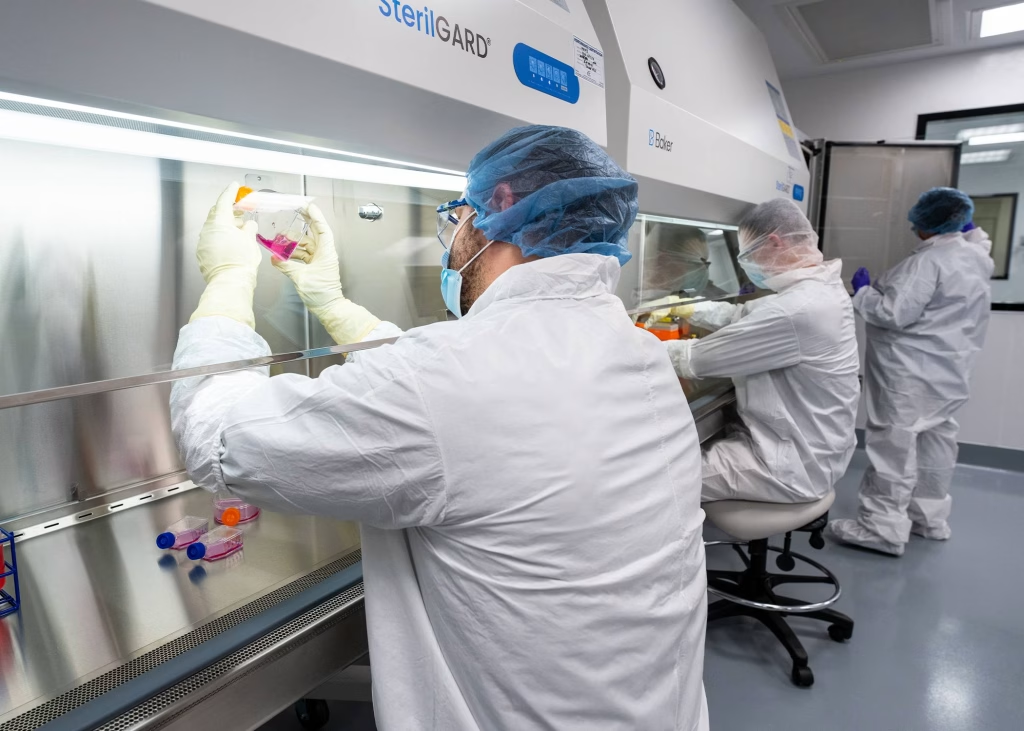
Courtesy of Roswell Park Comprehensive Cancer Center



Related Applications
Adherence to cGMP regulations assures the identity, strength, quality and purity of drug and treatment products by requiring manufacturers adequately control their operations. This level of quality control supports q wide range of different applications.
/01
Aseptic Biopharmaceutical Processing
Manufacturing in a sterile environment
Aseptic bioprocessing is a method of manufacturing that produces foods and pharmaceuticals that are free of bacteria without subjecting the final product to terminal sterilization. Baker has innovative solutions for a variety of bioprocessing workflows.
Aseptic Biopharmaceutical Processing Aseptic Biopharmaceutical Processing
/02
Biosafety and Contamination Control
Protecting personnel, product, and the environment.
Diverse applications in the life science, clinical, pharmaceutical, and industrial laboratory fields need to protect personnel, product, and the environment from exposure to biohazards and cross contamination. Since Baker developed the first clean air workstation in 1951, biosafety cabinets have played a critical role in ensuring the safety of lab personnel and the integrity of their work.
Biosafety and Contamination Control Biosafety and Contamination Control
/03
Cell Culture and Life Science Research
Alleviating the underlying cause of genetic and acquired diseases.
These therapies hold promise for treating a wide range of diseases, such as cancer, cystic fibrosis, heart disease, diabetes, hemophilia, and AIDS. One of the key aspects of both these therapies is that they involve the transfer of living product into patients. This creates challenges for common sterilization techniques. Precise, stable, and continuous control of the environmental conditions and contamination free environment are critical for the development of these treatments and the safety of the patient.
Cell Culture and Life Science Research Cell Culture and Life Science Research
Data in graphic sourced from the Alliance for Regenerative Medicine – https://alliancerm.org/