A workbench with history: biomedical research says goodbye after forty years
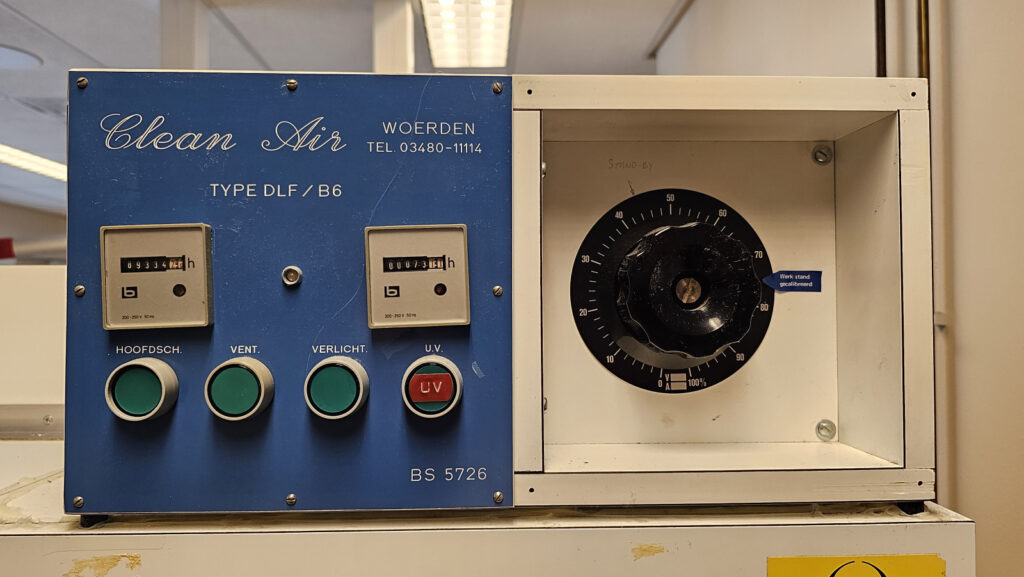
The Biomedicine Student Research Hub at the academic hospital bids farewell to a safety cabinet that has played an essential role in scientific research for forty years. The wooden cabinet, purchased in 1985, is no longer in use due to technical issues and will be replaced by a modern unit from Baker Company.
The cabinet played a key role for forty years in research and education at the Biomedicine Student Research Hub. Students and researchers conducted cell culture experiments and investigated important health issues such as cystic fibrosis, cardiovascular diseases, PLM, immunotherapy for brain disorders, and breast cancer. Toine ten Broeke, Assistant Professor at the Biomedicine Student Research Hub, said: “The cabinet was invaluable for early research into long COVID, with our hub being one of the first laboratories to work on it. It also played a crucial role in numerous research projects and in teaching biomedical techniques.”
Challenges in replacement
In mid-November 2024, the cabinet was decommissioned after forty years of use due to a broken filter and technical problems. The unit, which had been essential for cell culture experiments and biomedical education, is now retired. Replacing it is complex because of the lab’s unique layout, with the cabinet standing on a free table rather than being fixed to a wall or ceiling. Toine ten Broeke noted: “Finding the right replacement is a challenge, but we are confident that Baker Company will provide a new cabinet that allows us to continue our research and education at the highest level.”
New workbench
The new cabinet, supplied by Baker Company, is technically more advanced and suited to the lab’s unique layout. Whereas the old cabinet was made of wood and MDF, the new version is constructed from stainless steel and coated metal, improving hygiene and safety. Its fully foldable front increases accessibility for introducing equipment or performing thorough cleaning and disinfection. This upgrade contributes to more efficient and safer work, further advancing biomedical research. Researchers and students using the new cabinet continue to address societal health challenges, such as improving treatments for serious diseases and studying emerging threats like long COVID.