What Oxygen Really Means for Extracellular Vesicles
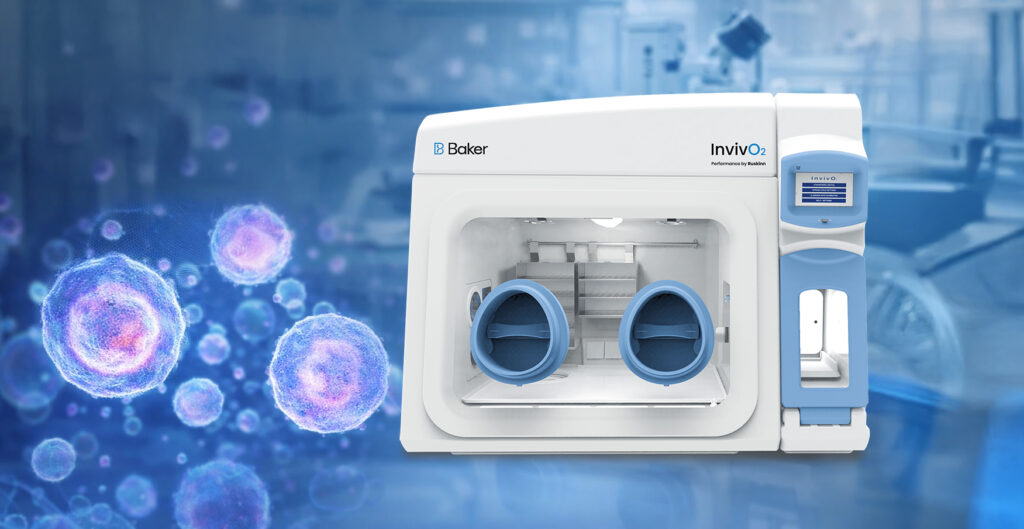
Extracellular vesicles (EVs) have become central to how researchers understand cell-to-cell communication. These nanoscale, membrane-bound particles carry proteins, lipids, and nucleic acids that influence signaling, regeneration, immune response, and disease progression. Yet one critical factor shaping EV biology is often overlooked: oxygen.
Most mammalian cells are still cultured at atmospheric oxygen levels of approximately 21%. While this is convenient, it is far removed from the oxygen conditions cells experience inside the human body. This discrepancy has important consequences for cellular health and, by extension, the extracellular vesicles cells produce.
Oxygen in the Body vs Oxygen in the Incubator
In vivo, oxygen levels vary widely by tissue. The brain operates at roughly 5% oxygen, bone marrow often closer to 2–3%, and certain tumor microenvironments can fall well below 1%. These levels are collectively referred to as physiological oxygen, or physioxia.
By contrast, culturing cells at 21% oxygen exposes them to what is effectively hyperoxic stress. Cells respond to this excess oxygen by altering their metabolism, activating stress pathways, and changing gene expression patterns. These changes do not stay confined to the cell itself. They directly influence the quantity, composition, and biological behavior of the extracellular vesicles released.
Why Oxygen Shapes Extracellular Vesicle Quality
Extracellular vesicles reflect the physiological state of their parent cells. When cells are stressed, their EVs tend to carry stress-associated signals. When cells are healthy and operating under conditions that resemble the in vivo environment, their EVs more accurately represent normal biology.
Research has shown that culturing cells under reduced oxygen conditions can significantly affect EV production and phenotype. In some cell types, prolonged exposure to physiological oxygen increases EV yield, improves cargo consistency, and enhances functional relevance compared to EVs produced under standard atmospheric conditions. Importantly, these effects are often dependent on chronic adaptation to lower oxygen, not short-term exposure. Cells require time to fully adjust their metabolic and signaling programs to hypoxia, and EV characteristics evolve accordingly.
Hypoxia, Adaptation, and Cellular Signaling
Oxygen availability regulates key cellular pathways, including hypoxia-inducible factor (HIF) signaling. Activation of these pathways drives changes in energy metabolism, protein synthesis, and intracellular trafficking. Over time, cells cultured in physiological oxygen adopt phenotypes that more closely resemble their in vivo counterparts.
This adaptation has meaningful downstream effects. EVs produced under physiologic oxygen conditions tend to show altered protein composition, improved functional stability, and signaling behaviors that align more closely with what is observed in living systems. In contrast, EVs generated under hyperoxic conditions may misrepresent biological reality, limiting reproducibility and translational relevance.
Beyond Cargo: Functional Consequences of Oxygen-Controlled EVs
Recent work has also highlighted how oxygen-regulated EVs participate in complex biological processes such as tissue repair, angiogenesis, and cellular stress mitigation. EVs produced under hypoxic or physiologically relevant conditions have been shown to influence lysosomal function, iron homeostasis, and resistance to oxidative damage in recipient cells. These findings underscore that oxygen tension does not merely change what EVs carry, but also how they function in downstream biological contexts.
Rethinking “Standard” Cell Culture
As EV-based research and therapies continue to expand, oxygen control is emerging as a foundational parameter rather than an experimental afterthought. Culturing cells at physiologic oxygen levels helps preserve cellular health, reduces artificial stress responses, and supports the production of extracellular vesicles that more faithfully represent in vivo biology.
In short, better oxygen leads to better cells, and better cells produce better extracellular vesicles.
A Short Expert Perspective on Oxygen and EVs
To explore this topic further, watch the short video below featuring Dr. Krista Rantanen, Director of Global Business Development, Advanced Life Science Markets, The Baker Company. In this brief overview, she explains why oxygen tension matters for extracellular vesicles and how shifting from atmospheric oxygen to physiological oxygen can fundamentally improve EV relevance and quality.
Best-fit Baker gear and why:
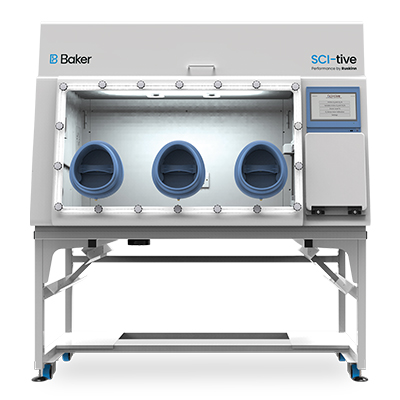
Provides precise, physiologic oxygen control for cell culture and handling, enabling long-term adaptation to physioxia or hypoxia for extracellular vesicle research that more accurately reflects in vivo biology.
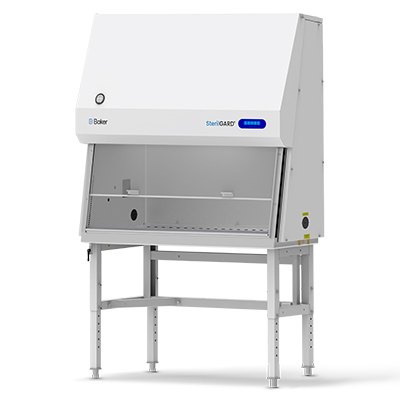
SterilGARD® e3 Biosafety Cabinet
Ensures clean, contamination-controlled handling of cells and extracellular vesicle samples during preparation, processing, and downstream workflows without disrupting laboratory safety or sample integrity.
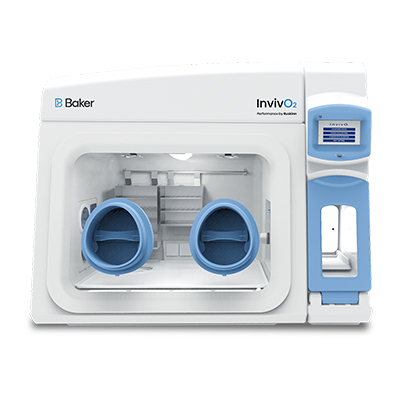
Supports stable, low-oxygen environments for hypoxia-driven cell culture studies, allowing researchers to investigate how oxygen tension influences cellular behavior and extracellular vesicle production.
Further Reading
- Li Y-Y, Ma B, Lu J-W, Zhang K-C, Ma C, Bai S-F, Li Y-J, Ying S-Q, Weng W-Z, Zhang K, Hu X-W, Li R, Zheng C-X, Xu X-R, Chen J, Jin F, Xu H-K, Xie J-W, Jin Y, Shuai Y*, Sui B-D*.
Lysosome-featured cell aggregate-released extracellular vesicles regulate iron homeostasis and alleviate post-irradiation endothelial ferroptosis for mandibular regeneration.
Advanced Science (2025).
https://doi.org/10.1002/advs.202505070 - Pridgeon C.S., Airavaara K., Monola J., Jokela A., Palmer D., Yliperttula M., Harjumäki R.
Chronic hypoxia for the adaptation of extracellular vesicle phenotype.
Scientific Reports (2024).
https://doi.org/10.1038/s41598-024-73453-1