Engineering Controls to Support Laboratory Science: More Than Just a Biosafety Cabinet
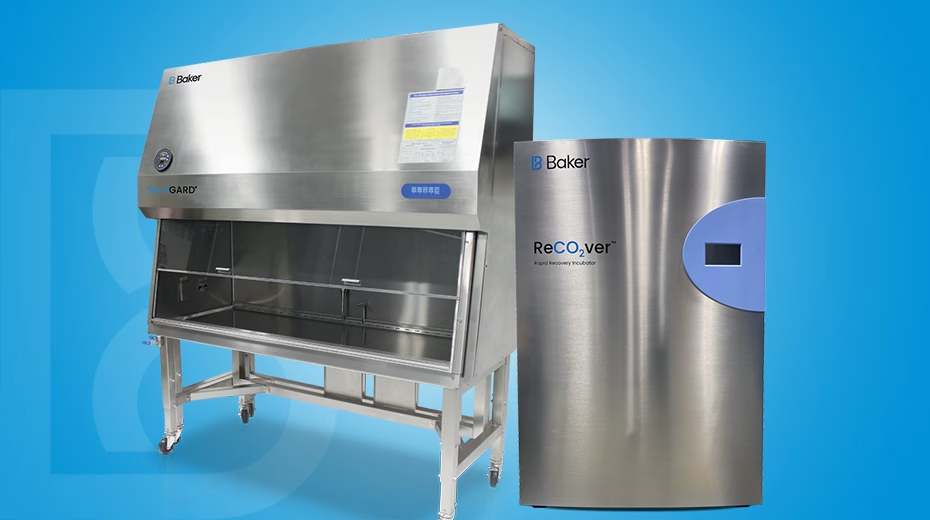
Engineering controls are at the heart of safe and effective laboratory operations, spanning academic settings to cGMP (current Good Manufacturing Practice) facilities. This blog post explores how ventilation equipment, biosafety cabinets (BSCs), and other engineering controls support laboratory science, offering guidance on selecting and optimizing these tools for diverse research and production environments.
The Four Buckets of Ventilation Equipment
When setting up or modifying a laboratory, understanding ventilation equipment is crucial. These tools generally fall into four categories:
- Fume Hoods: Provide personnel protection by venting chemical vapors.
- Clean Benches: Focus on product protection, offering sterile airflow to protect samples but not personnel or the environment.
- Biological Safety Cabinets (BSCs): Deliver comprehensive protection for personnel, products, and the environment, making them the most versatile choice.
- Glove Boxes: Enclosed systems for specialized work.
Each type serves a specific purpose, and their application depends on lab needs, risk assessments, and the materials handled.
Biosafety Cabinets: Types and Applications
Biosafety cabinets are categorized into several classes, but Class II BSCs are the most prevalent in both research and production settings. These are further divided into Type A2 and Type B2, with distinct differences in their ability to handle vapors and their reliance on exhaust systems, as defined by the NSF standards.
- Type A2 BSCs: Feature partial internal recirculation of air and may be suitable for minute quantities of volatile toxic compounds when connected to a canopy exhaust.
- Type B2 BSCs: Known as total exhaust systems, these do not recirculate air, making them ideal for handling larger quantities of volatile compounds. However, they require significant infrastructure and incur higher operational costs.
cGMP Facilities: Transitioning for Compliance
Modern advancements in medicine, particularly in gene and cell therapy, have driven the need for more BSC-heavy operations in cGMP facilities. While traditional cGMP environments focus heavily on product protection through isolators and closed systems, the latest processes often rely on open systems using BSCs. This shift brings unique challenges, including:
- Introducing inherently biohazardous donor samples into a traditionally sterile environment of a cleanroom setting
- Preventing cross-contamination between patient batches.
- Ensuring frequent and effective disinfection of equipment, keeping material of construction and chemical compatibility a priority
Materials and Monitoring in cGMP BSCs
For cGMP compliance, the materials and features of BSCs play a vital role. Stainless steel, particularly grade 316, is preferred for better corrosion resistance to commonly used cleaning products. Other key considerations include:
- Smooth, puncture-free interior surfaces to reduce corrosion and contamination risks.
- Integrated particle monitoring systems to meet cGMP particle monitoring requirements while minimizing equipment that is introduced into the work zone of the BSC
- Patch-free HEPA filters for consistent performance.
Airflow monitoring is equally essential. Many cGMP BSCs integrate systems for continuous monitoring of particulate levels and airflow, ensuring compliance with stringent sterility requirements and providing real-time data at the time of production regarding airflow and particle levels.
Innovations in Laboratory Design
To meet the growing demand for large-scale containment, manufacturers are developing customized solutions such as walk-in BSCs and modular enclosures that integrate robotic systems for automated workflows. These innovations not only improve safety but also enhance efficiency in high-demand environments.
Conclusion
From biosafety cabinets to large-scale enclosures, engineering controls are indispensable for modern laboratory science and scale-up/ manufacturing facilities. Whether you’re working in an academic lab or a cutting-edge cGMP facility, understanding and utilizing these tools effectively can elevate safety and productivity while meeting regulatory standards.
To learn more about these advancements and how they can benefit your laboratory, reach out to one of our experts today.