Horizontal vs. Vertical Flow Clean Benches: Choosing the Right Protection for Your Work

Maintaining a clean and controlled environment is crucial in many industries, from pharmaceuticals and electronics to research and healthcare. One essential piece of equipment for achieving this is the clean bench, also known as a laminar flow hood. But with two main types – horizontal and vertical flow – how do you choose the right one for your needs? This post will break down the key differences to help you make an informed decision.
What is a Clean Bench?
At its core, a clean bench provides a workspace with extremely low particulate contamination. It achieves this by pushing air through a high-efficiency particulate air (HEPA) filter, which removes tiny particles, and then directing that filtered air in a unidirectional (or laminar) flow across the work surface. This creates a clean zone, protecting sensitive samples and processes from airborne contaminants.
The Key Difference: Airflow
The main difference between horizontal and vertical flow clean benches lies in the direction of the filtered airflow:
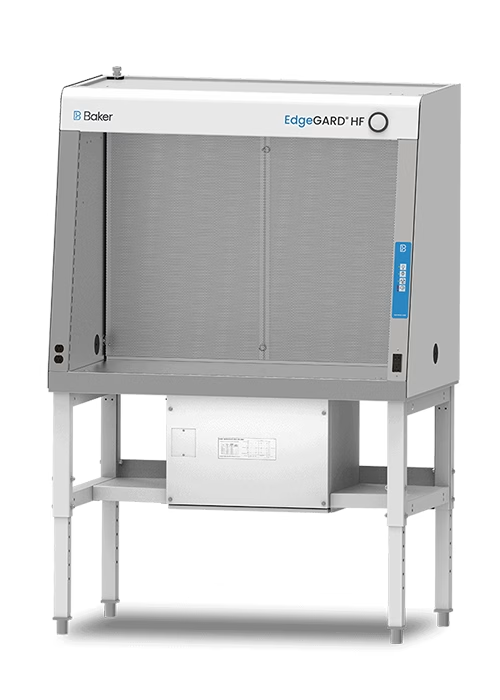
Horizontal Flow: Imagine a gentle breeze blowing straight towards you. In a horizontal flow bench, air is drawn in from the bottom, filtered, and then blown horizontally across the work surface towards the operator.
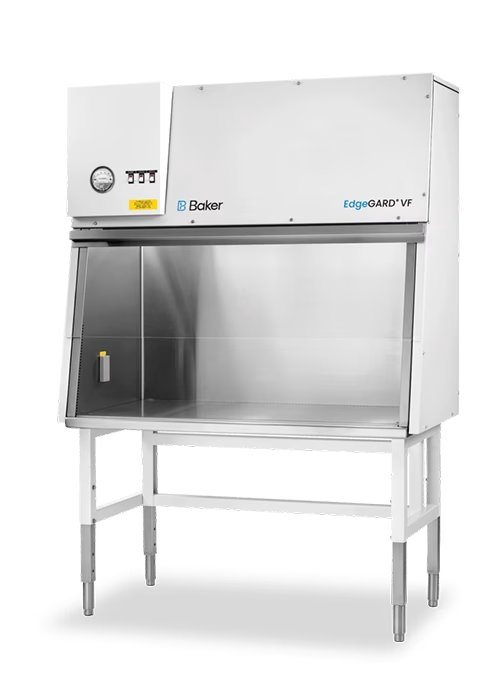
Vertical Flow: Now picture air falling straight down from above. In a vertical flow bench, air is drawn in from the top, filtered, and then blown vertically downwards onto the work surface.
This difference in airflow has implications for how each type of bench performs.
Horizontal vs. Vertical: A Side-by-Side Comparison
| Feature | Horizontal Flow | Vertical Flow |
| Airflow Direction | Horizontal (back to front) | Vertical (top to bottom) |
| Filter Location | Back of the work area | Top of the work area |
| Turbulence | Lower turbulence on the work surface | Higher potential for turbulence on work surface |
| Ergonomics | Open front provides no restrictions to work area | Front view screen can help direct outward flowing air from the user’s face |
Should you choose Horizontal Flow or Vertical Flow?
The best choice depends entirely on your specific application and cleanliness priorities. Both clean bench styles provide First Air to your applications, which is unidirectional air that has passed through a HEPA filter and not touched another surface. This is an important step in maintaining a contamination-free environment for your samples and procedures.
Choose Horizontal Flow when performing horizontal procedures, or low procedures on the work surface. The matching airflow patterns will keep First Air passing across your samples and procedures and minimize cross contamination. The open work area with no view screen can enhance ergonomics of certain techniques as well.
Choose Vertical Flow when performing higher vertical procedures away from the work area, especially when working with tall equipment that could disrupt horizontal airflow. Having First Air come down onto a procedure where the top needs to be kept contamination-free can often enhance workflows.
A Crucial Note on Safety
It’s essential to remember that clean benches are designed for product protection, not operator protection from hazardous materials. Both Horizontal and Vertical Clean Benches direct the potentially contaminated air towards the user and should be used with nonhazardous components only. If you’re working with hazardous substances, you must use a biological safety cabinet (BSC), which provides protection for both the product and the operator.
Making the Right Choice
Choosing between a horizontal and vertical flow clean bench is a critical decision. By understanding the key differences in airflow and their implications, you can select the right equipment to ensure the integrity of your work and the safety of your personnel. Consider your specific needs and priorities, and don’t hesitate to consult with experts if you need further guidance.