Researchers exchange insights on tumor hypoxia during the first Dutch Hypox Connect
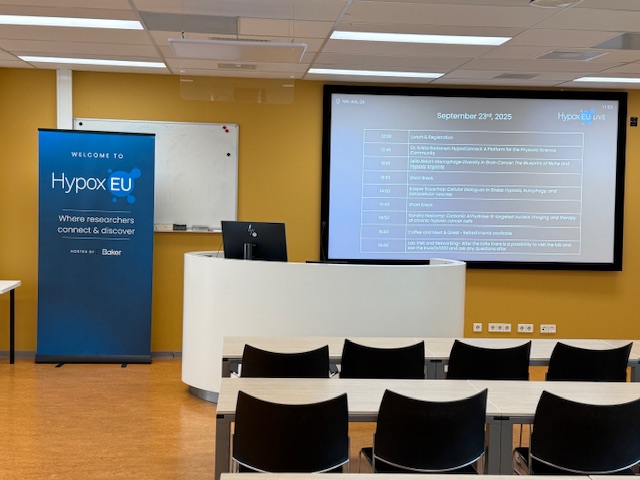
On 23 September, the first Dutch edition of Hypox Connect took place at the Netherlands Cancer Institute (NKI) in Amsterdam. During this afternoon symposium, researchers, early-career scientists, and industry experts from both the Netherlands and abroad gathered to share the latest insights into the role of tumor hypoxia in cancer biology. In addition to lectures by Dr. Leila Akkari, Prof. Dr. Sandra Heskamp, and Dr. Kasper Rouschop, there was a live demonstration of an oxygen-controlled workstation. The event provided a platform for presenting current research results and engaging in in-depth discussions.
HypoxEU is a European network that brings researchers together around oxygen biology and hypoxia. It promotes knowledge exchange through webinars and physical meetings, such as the small-scale Hypox Connect symposia, and fosters collaboration across disciplines and institutions. “The Amsterdam edition of Hypox Connect at NKI, with over 70 attendees, offered plenty of opportunity for discussion and idea exchange,” says Dr. Krista Rantanen, HypoxGlobal coordinator and co-organizer of the event. “It was inspiring to see researchers from different disciplines meet and explore new collaboration opportunities.”
New insights from diverse perspectives
The program featured three lectures by leading experts, all studying tumor hypoxia but from different research areas. This variety of perspectives yielded many new insights. “Each speaker brought a completely different viewpoint, and we challenged each other to reconsider our hypotheses and generate innovative ideas to tackle therapy resistance caused by hypoxia in cancer,” says Prof. Dr. Sandra Heskamp, a specialist in nuclear imaging.
Dr. Leila Akkari, winner of the prestigious Ammodo Science Award, also praised the event: “As a fundamental researcher, Hypox Connect was a fantastic opportunity to place our lab’s work in a broader context. It helped us appreciate the clinical relevance of hypoxia-focused research, applied to our interests in tumor microenvironments.”
“Hypox Connect was an inspiring platform that brought researchers from different disciplines together and sparked lively discussions, fresh ideas, and new insights into tumor hypoxia,” adds Dr. Kasper Rouschop.
Technology in practice
In addition to the lectures, there was a demonstration of an oxygen-controlled workstation. This workstation, supplied by The Baker Company, is globally recognized and allows scientists to precisely simulate oxygen variations. “With these workstations, we can better study tumor behavior and therapy resistance,” explains Apostolos Menegakis, senior postdoc at NKI and host of the event. “The demonstration gave participants the opportunity to experience the technology firsthand and see how fundamental and translational research come together in practice.”
Connection and collaboration
Participants also emphasized the importance of networking. Researchers from different institutions often met for the first time, leading to new networks and collaboration plans. “Tumor hypoxia is a niche research area, often approached from different disciplines. Bringing people together helps bridge these research areas,” highlights Rantanen. “At Hypox Connect, it’s not just about research results. It’s equally important that early-career researchers are actively involved, make new connections, and learn from experienced colleagues.”
“The lively discussions and exchange of ideas with colleagues from different disciplines were inspiring,” says Dr. Leila Akkari. “Events like this are essential to foster collaboration and accelerate discoveries.”
Looking ahead
The Amsterdam edition demonstrates that the Hypox Connect format is effective: a compact program with ample space for discussion and knowledge exchange. In addition to these in-person meetings, online webinars and other Hypox Connect editions are regularly organized to keep researchers connected. In September 2026, Hypox Live will take place in Essen—a three-day conference bringing together researchers from across Europe to further discuss hypoxia research and promote collaboration.